Tree Pros / Hazardous Tree Removal
When a tree puts property at risk.
A dead tree above a garage, a damaged trunk beside a pool enclosure, or a tree leaning toward a busy driveway deserves careful attention. Hazardous tree work begins with keeping people clear and understanding what the tree could affect.
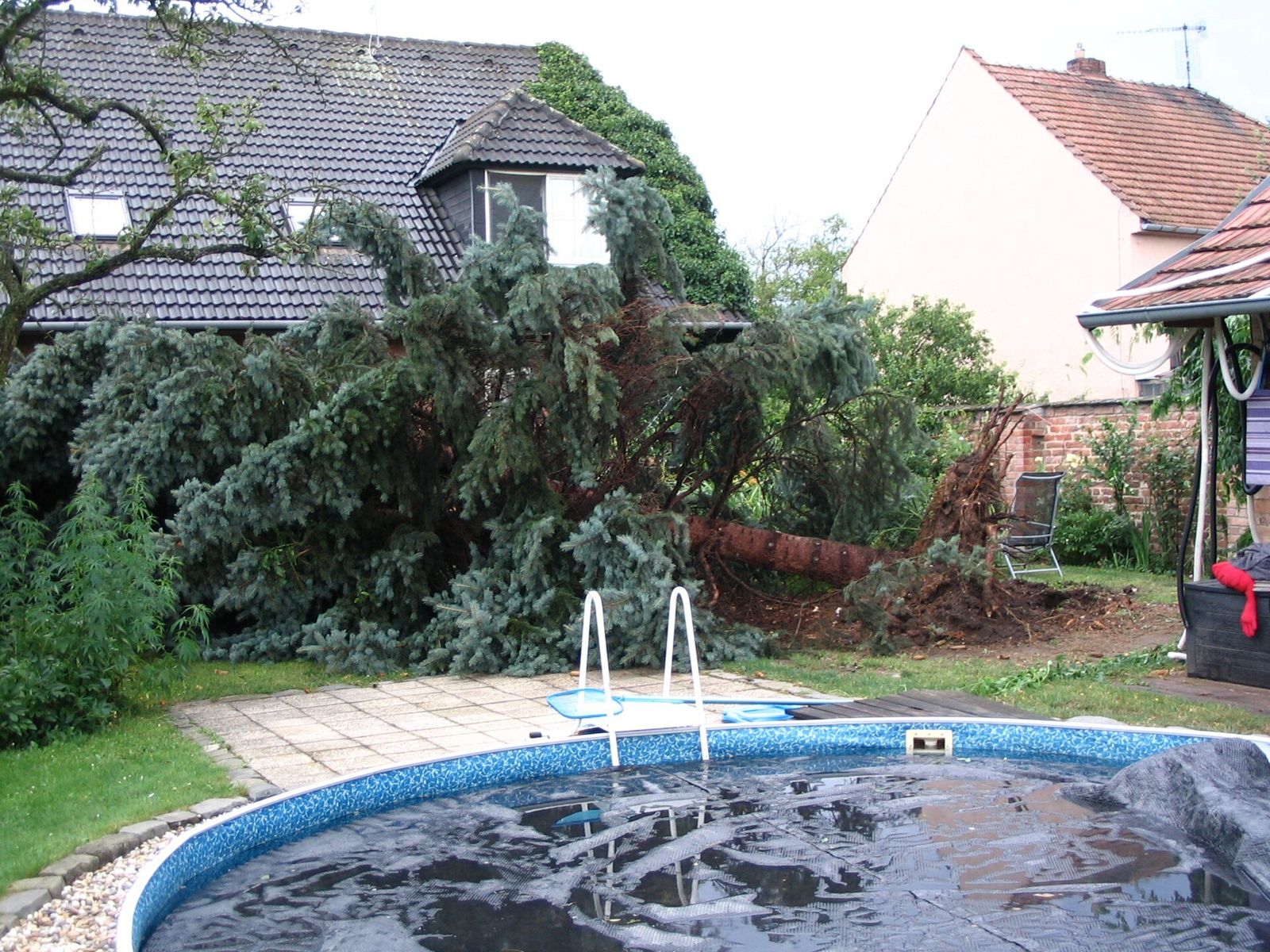
Look beyond the trunk
The concern may be the whole tree or one damaged part of it. A severely damaged crown, broken limb, movement at the base or a new lean can change how a site is used. Avoid the affected area rather than approaching the tree to examine it yourself. Photographs taken from an already safe position may help describe the situation, but they cannot establish that a tree is safe.
Nearby structures influence planning: houses, garages, sheds, garden walls and pool enclosures all restrict the available working space. Cedar fencing, gate operators and valuable planting may sit directly below the branches. On a boundary, ownership and access to neighboring land also need to be clarified.
A planned removal is different from an immediate hazard
Some concerning trees can be reviewed and scheduled as a planned project. Others create an immediate threat to people or occupied areas. If there is immediate danger, contact emergency services and follow their direction. Tree Pros is not a substitute for emergency response, and this website does not provide an urgent dispatch service.
Storm damage can leave a tree supported by another tree, a fence or a building. Removing that support without a plan can change the situation suddenly. The appropriate sequence may require coordination with the utility, emergency services or a building professional before tree removal is possible.
Plan around the features worth protecting
A hazardous removal needs a realistic working area and a way to move material away. Discuss driveway closures, parking, access to outbuildings and whether people can continue using adjoining grounds. Sectional removal may be considered where the space or condition makes it appropriate; the workable method must be established on site.
No removal can promise that surrounding property will be unaffected. The purpose of planning is to identify constraints and reduce avoidable risks. Confirm the removal scope, cleanup, stump treatment and any required approvals before work. Do not assume an urgent concern automatically removes local permitting obligations.
Situations to discuss
- Dead trees near houses and garages
- Severely damaged or unstable trees
- Trees threatening fences, gates or pool enclosures
- Storm-damaged trees beside neighboring property